
From Waste to Water: AfriAdapt at the IGNITE Challenge Bootcamp
August 18 – 21, 2026
In many of the schools that rely on the UN World Food Programme’s feeding programmes, two challenges sit side by side: not enough water, and not enough reliable ways to grow food. It’s easy to treat them as separate problems needing separate solutions. AfriAdapt has spent years arguing they aren’t — and this August, we got to make that case in person.
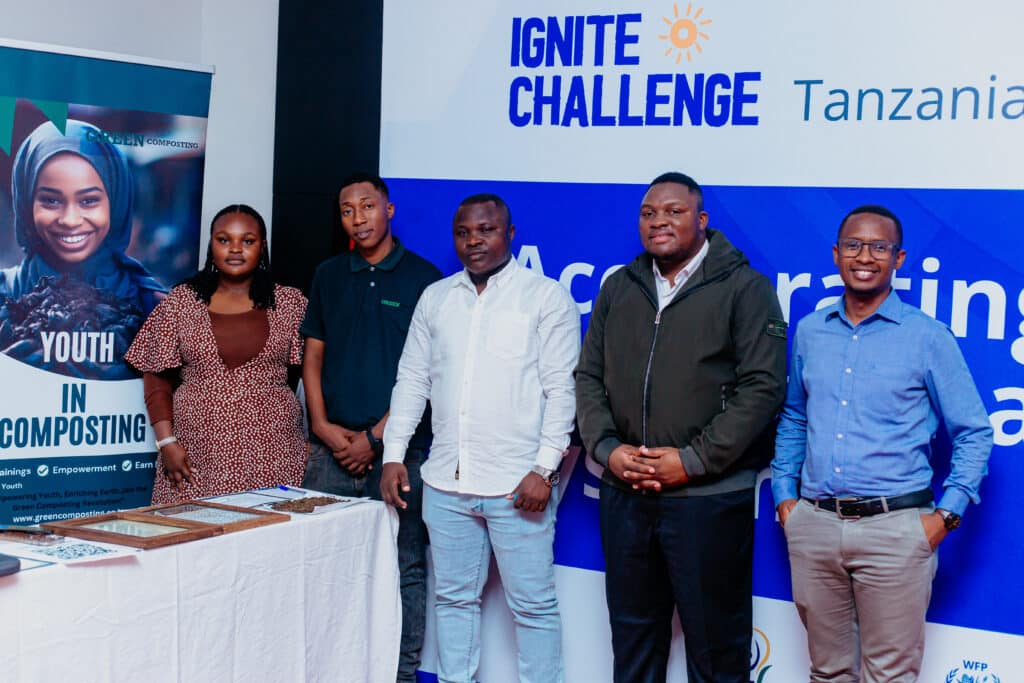
On 18 and 21 August, AfriAdapt joined the IGNITE Challenge Bootcamp, a collaboration between the UN World Food Programme (WFP) and StartHub Africa designed to bring innovators, technical experts, and stakeholders together around the climate and resilience challenges facing communities across the region. Among the innovators we supported through the bootcamp was Green Composting, whose work sits right at the intersection AfriAdapt cares most about: turning organic waste streams into resources a community can actually use.
Co-creating solutions, not just teaching them
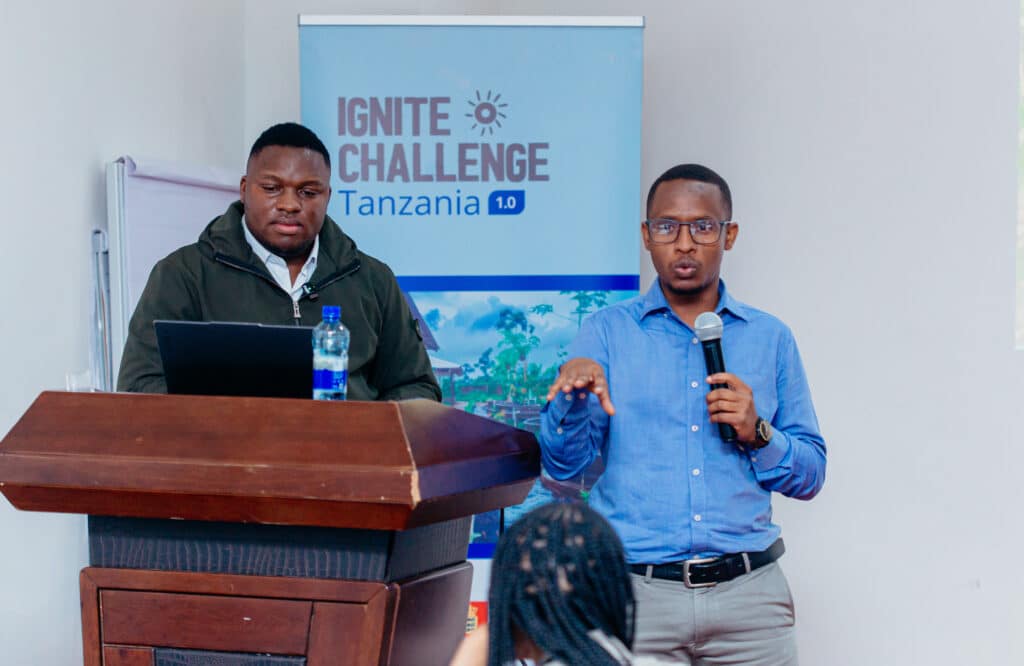
On the first day, our Technical Specialist, PEng(T) Charles A. Muhamba, joined Green Composting and fellow innovators as a technical guide rather than a lecturer. The session introduced Decentralised Wastewater Treatment Systems and Faecal Sludge Management, but the real work happened in the discussion that followed: how could these systems be adapted specifically for school contexts, where two challenges tend to show up together — not enough water, and not enough affordable fertilizer to keep a school garden or crop plot productive?
It’s a technical subject, but the idea behind it is simple and human: wastewater and faecal sludge from toilets don’t have to be a dead end. Treated properly, they can be recovered as clean water and organic fertilizer — resources that can go straight back into irrigation and crop production on the same school grounds where they came from.
For schools under WFP’s food provision programme, that recovered water and fertilizer isn’t an abstraction. It’s the difference between a garden that struggles through the dry season and one that keeps producing food for children who depend on that meal. Working through the specifics together — what a school compound actually has to work with, what a caretaker can realistically maintain, what a modest budget can support — is what turns a general treatment technology into something that could genuinely take root in a school setting, rather than staying a resource most systems still treat as waste to dispose of.
Meeting the innovators
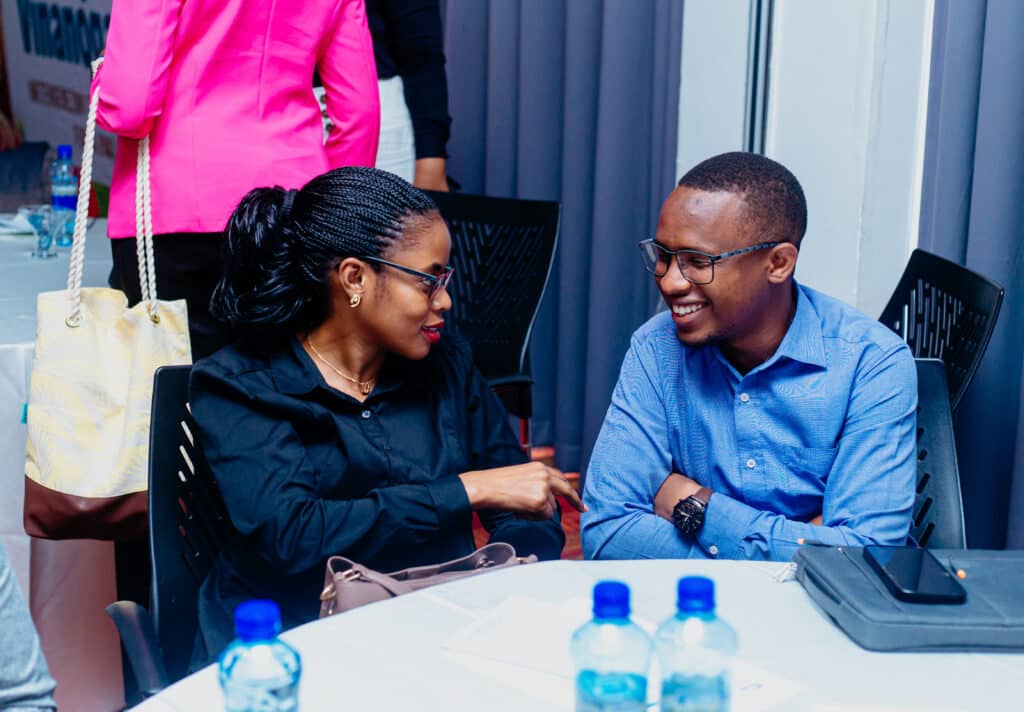
Three days later, on 21 August, the bootcamp culminated in Demo Day — the moment weeks of ideas, prototypes, and pitches meet an audience. Our Director, Methusela Bahame, attended the event, taking in the innovation pitches and spending time with the founders, technical experts, and partners in the room.
Days like this are less about any single pitch and more about the texture of the room: young innovators refining an idea in real time, technical partners offering a hard question that makes the idea better, and organizations like WFP and StartHub Africa building the kind of ecosystem where climate solutions actually get tested, not just theorized.
Beyond resilience: making the case for climate finance
There’s a question we kept returning to during the bootcamp, and it matters as much as the engineering does: how does a solution like this move from a good pilot to something that actually gets funded and scaled?
Decentralised wastewater treatment and faecal sludge recovery aren’t only climate-resilient — they’re climate-financeable. Every cubic metre of water recovered is water that no longer needs to be pumped, trucked, or treated by more carbon-intensive means. Every kilogram of organic fertilizer recovered from sludge is a kilogram of synthetic fertilizer that no longer needs to be manufactured and shipped in, with all the emissions that come with that. Measured and verified properly, these are exactly the kinds of outcomes that carbon markets and blended finance vehicles are built to reward.
That’s a piece of the puzzle AfriAdapt keeps pushing on: helping innovators and public institutions turn a resilience solution into a bankable one — with the data, monitoring, and reporting that financial institutions and carbon buyers need before they say yes. A solution can work perfectly and still stay small if nobody can afford to fund it at scale. Making it bankable is what lets it reach every school it’s meant for, not just the pilot site.
Why it matters to us
AfriAdapt works at the interface of climate resilience, water and sanitation, and ESG — but underneath the frameworks, the work comes down to something simpler: helping communities turn scarcity into something they can manage, and sometimes even thrive on. Wastewater becoming irrigation water. Sludge becoming fertilizer. A school garden staying green through a dry season because someone solved the water problem differently — in a way that also made financial sense to the people who fund it.
We’re grateful to the UN World Food Programme and StartHub Africa for building a space where that kind of work gets shared, tested, and taken seriously — to Green Composting for the collaboration — and to PEng(T) Charles A. Muhamba and Methusela Bahame for representing AfriAdapt in it.
Ready to turn climate, water or ESG ambition into practical action?
Partner with AfriAdapt to design, localise and implement solutions that are grounded in real contexts and built for measurable impact.